After the boom: how Turkey's property market turned in 2025
From the 2020–2022 boom to a balanced market in 2025: what drove the change, why buyers gained negotiating room and four rules for buying in a calmer market.

Contents
Key points
- After the boom years of 2020–2022, the source describes Turkey's property market in early 2025 as calmer and more balanced.
- The drivers: higher global borrowing costs, a maturing market, government changes to residency and property rules, and inflation pressure.
- In 2025 buyers had more choice and more room to negotiate, with developers and private sellers more often offering payment plans or price flexibility.
- The advice: prioritise liquidity, vet developers, distinguish between regions and think long term (5–10 years).
As of 28 April 2025, source: commentary on the Turkish property market published on 28 April 2025. The assessments reflect conditions in spring 2025.
How the balance shifted
After several years of rapid growth, the source saw 2025 as a calmer chapter, one that rewards buyers who take their time and choose strategically.
The change built up gradually. Globally, rising borrowing costs made investors more selective. In Turkey, an attractive exchange rate, the lifestyle and relatively affordable prices had long fuelled strong demand, particularly in Istanbul, Antalya and Bodrum. By late 2024 demand cooled, not from lack of interest, the source says, but because the market had matured. Government steps to stabilise the sector, including updates to residency and property rules, supported a more sustainable model, while inflation made buyers more cautious.
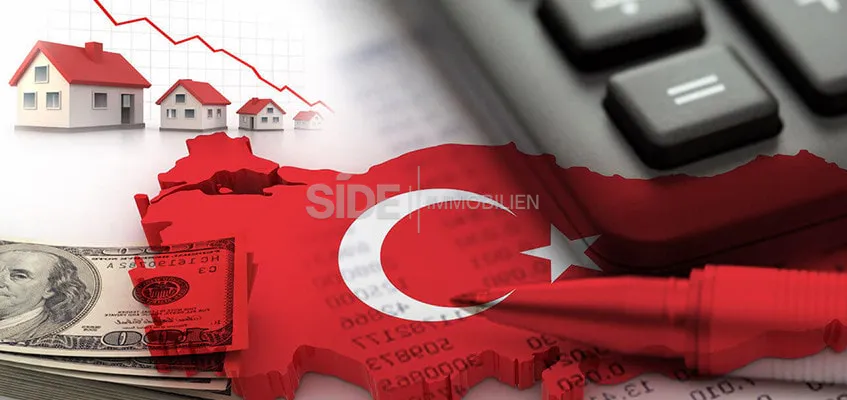
2020 to 2024 at a glance
2020–2022, the frenzy. Many locals bought property to protect their savings as the Turkish lira lost value. Foreign investors, especially from the Gulf, Europe and Russia, were buying in Istanbul, Antalya and Bodrum at the same time. The inflow of international money pushed prices up sharply and left homes in short supply. Sellers held the stronger hand.
Late 2023, the turn. Activity slowed. Prices had risen a lot, buyers grew pickier and new developments added stock. The urgency faded.
Early 2025, balance. More choice and more flexibility; some even felt the market tilted slightly towards buyers. The source reads this as a market maturing, not collapsing.
For newer figures on how the market has developed, see Turkey home sales in 2025 and house prices in March 2026.
The backdrop in 2025
The source described the political environment as stable but cautious, with the government supporting the economy through real estate: clearer ownership rights, simpler procedures and incentives in some regions. Buyers were advised to watch government-prioritised areas, which often gain better infrastructure and future value.
Supply and demand were better matched. Where limited stock once drove sharp rises, more inventory now allowed for more deliberate buying.
Why the source saw 2025 as a good time to buy
- Prices had adjusted in key regions and inventory had grown.
- Sellers were more open to negotiation, and payment plans, added services or price flexibility were offered more often.
- Exchange rates boosted the purchasing power of buyers paying in euros or US dollars.
- Updated regulations made ownership more transparent for foreigners.
- Some sellers showed clear motivation to close deals.
Purchase procedures have changed since; for newer information, see Turkey's secure payment system for title deeds.
Four rules for a buyer's market
The fear of missing out that drove the boom years has gone, according to the source. Clear thinking matters more:
- Prioritise liquidity: properties in prime or developing areas near transport and infrastructure are easier to resell or let.
- Vet the developer: choose projects from credible developers with a solid track record.
- Compare regions: price corrections varied. Coastal cities such as Antalya and İzmir held up well, while some inland areas corrected more sharply.
- Know your horizon: holding for 5–10 years gives better prospects for capital growth and rental income.
On the coast around Side and Manavgat, that means checking location, transport links and the quality of the complex, for example among the region's residences. This article is general market information, not legal or tax advice.
Bottom line
The market has changed; Turkey's appeal, with its lively cities, rich culture and quality of life, has not. Buyers who come prepared make better decisions in a calmer market. Browse current properties for sale or contact us with your questions.