
Spanish Property Purchases: Getting Through KYC and AML Checks
Who is buying, where the money comes from, how it travels: the KYC and AML checks Spanish banks and notaries apply, and how to have your file ready before signing an Arras contract.

Contents
Key points
- Foreign buyers face no major ownership restrictions in Spain, but must document identity, source of funds and payment route.
- KYC answers "who is buying"; AML answers "where did the money come from". The basis is Law 10/2010, supervised by SEPBLAC.
- Checks apply at every price level; the value only affects how deep the review goes.
- Company purchases require identifying the ultimate beneficial owner (UBO), commonly anyone with more than 25% ownership or other effective control.
- The biggest practical risk is signing a binding Contrato de Arras before your compliance file is ready.
As of 9 June 2026, sources: SEPBLAC, BOE – Law 10/2010.
This article is general information, not legal or tax advice. Rules and requirements may have changed since then – please check the current position.
Where delays really come from
KYC and AML checks rarely hold up a purchase when the paperwork is prepared in advance. Trouble usually starts when buyers sign a binding contract, wire money or book the notary first, and only then ask which documents are needed.
Two checks, two questions
KYC: proving who you are
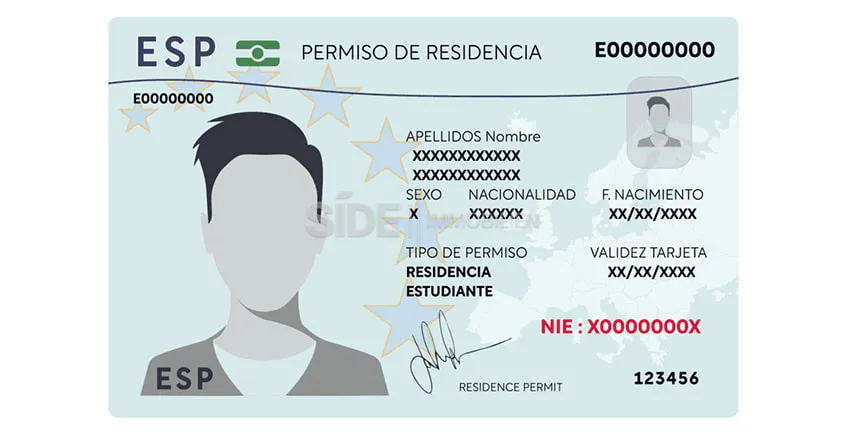
Banks, agencies and notaries (notarios) must know who is buying and whether you act alone, with a spouse, through a company or via a representative. Expect to provide a valid passport and your NIE, proof of current address (utility bill or bank statement), your tax residency and a clear link between you and the account funding the deal.
AML: explaining your money
A high balance is not enough. Banks and notaries want the economic history behind the funds, and they look especially closely when the price does not fit your documented income, when the name on the transfer differs from the buyer on the deed, or when the route involves unexplained intermediaries, offshore accounts or jurisdictions requiring enhanced due diligence.
The legal framework
Law 10/2010 on the prevention of money laundering and terrorist financing requires banks, notaries, developers, real estate professionals and, in certain cases, lawyers to identify clients, verify beneficial ownership, apply due diligence, keep records and report suspicious activity. According to the source, recent criminal-law changes did not create a separate regime for property, but they reflect a stricter climate, and regulated professionals are less willing to proceed with a thin file.
SEPBLAC, Spain's financial intelligence unit, does not approve each purchase manually but sets the framework. When a red flag appears, an obliged entity may ask for more documents, delay the deal, restrict account activity or report through AML channels.
The parties involved:
- Real estate agency: spots practical risks early and coordinates timing with the lawyer, bank and notary.
- Spanish bank: reviews you when opening an account, receiving international transfers, processing a mortgage or issuing a certified bank cheque (cheque bancario).
- Notary: checks ID, payment method and the legality of funds just before the escritura pública is signed.
- Your lawyer: checks the Registro de la Propiedad, debts and charges, and the contract, and aligns the legal timeline with the bank.
Building your file
Personal and tax documents: passport, NIE (without it you cannot pay taxes, open an account or register a property), tax residency certificate, tax returns for the last 1–2 years, and employment contracts, payslips or dividend statements. With several income streams, a one-page summary in English or Spanish explaining how your capital was built saves a lot of back-and-forth. A mortgage brings its own affordability review, and even an approved borrower can be delayed by a poorly documented deposit.
Buying through a company: a fresh commercial registry extract, articles of association and ownership chart, passports of directors and major shareholders, and a corporate resolution approving the purchase.
Source of funds vs. source of wealth: the first covers the specific money for this purchase (for example €300,000 from selling a previous flat); the second explains how your overall net worth was built. Smaller purchases may need only the first; high-value deals, complex structures or non-EU funds may require both. Foreign documents often need a sworn translation (traductor jurado).
- Asset sale: signed sale contract, registry records, statements showing the proceeds arriving.
- Business profits: audited accounts, dividend resolution, tax filings.
- Inheritance or gift: notarised deeds, proof of tax paid, banking trail.
- Savings: gradual build-up over months or years; a large unexplained deposit shortly before completion invites questions.
Resale deals often leave little time between the Arras contract and the notary, so documents should be ready before you commit. New builds spread payments out, but checks can still come before larger instalments.
Moving the money
The cleanest route is a direct transfer from your own account abroad to your own account in Spain. Third-party payers need a legal bridge: a notarised loan agreement, a formal gift deed or a corporate distribution contract. Before sending funds from outside the EU, ask your Spanish bank what it needs to know about the amount, origin, sender and purpose.
A temporary account restriction does not necessarily mean an investigation; often the bank simply needs a manual review. Reduce the risk by announcing the transfer date, amount, sending account and purpose, sending your source-of-funds file to compliance in advance, and adding a simple spreadsheet if money moves through several accounts.
Crypto? Spanish property deals are documented, taxed and registered in euros. The usual compliant route is to convert through a regulated provider, withdraw to your personal account and keep exchange reports, transaction history, tax records and proof of the original money used. A direct wallet-to-wallet payment to the seller is likely to cause serious problems.
Red flags
- Income that does not support the price, without evidence of accumulated capital.
- Funds from high-risk jurisdictions or with sanctions exposure.
- Opaque structures: layered offshore companies, nominee directors, trusts, recent ownership changes.
- The Arras trap: the deposit contract fixes a binding deadline. If you cannot complete because funds are not cleared, the seller may not have to extend the deadline or return your deposit.
Final checklist
- Secure your NIE and check your passport.
- Gather tax returns, income proof and source-of-funds documents.
- Check whether enhanced checks apply (sanctions, politically exposed person status, high-risk countries, complex ownership).
- Identify documents needing sworn translation.
- Let your bank review your file before signing an Arras contract.
- Pay from your personal account.
- Have an independent lawyer coordinate bank, notary and contract timing.
EU citizens are subject to the same rules, though SEPA transfers may be reviewed faster. If your account is restricted mid-transaction, ask for a precise list of what is missing, respond quickly, involve your lawyer and notify the seller formally if the Arras deadline is at risk.
Comparing Spain with Turkey? Payment routes and proof of funds matter on the Turkish Riviera too. Browse homes around Side under properties for sale or contact us.